
Yes, if you want flexible hours, a skill-based income, and a job that allows for career progression over time, a good side hustle as a nail technician could be a great option. Many people use nail work to earn extra money in the evenings or on the weekends without having to leave their main job. However, this path requires licensing, patience, and people skills. It may not pay you instant money, but if you work hard and patiently, you can earn a substantial amount from it.
This guide explains what a side hustle in the US really looks like, how much you can earn from this job, how much investment you need to start this job, and who should avoid it. Everything here is updated for 2025/2026 and written for complete beginners.
What a Nail Technician Side Hustle Looks Like in Real Life
Typical Nail Technician Flexible Hours
Most people start a nail extension business part-time when they have free time. You can start your business in the evening after your full-time job, or if not in the evening, you can do it on your day off. For example, some techs take on three clients on Friday nights and six on Saturdays and Sundays. This setup keeps burnout low while still bringing in consistent cash.
However, flexibility doesn’t mean randomness. Successful nail techs set clear days and times. Clients respect your schedule more when you stay consistent.
Common Work Setups in the U.S.
There are usually three types of setups. Many beginners work in salons because they have proper systems and receive walk-in clients. Some people work as freelance nail technicians and rent a small suite. In some states, working from home is also allowed with a permit.
Mobile services are also growing rapidly these days. By becoming a mobile nail technician, you can visit clients’ homes to provide services, which works well in busy cities.
How Much Money Can You Make as a Nail Technician on the Side?
Nail Technician Income Potential Part-Time
People often ask, How much can a part-time nail tech make? The short answer depends on hours, location, and rates. In many U.S. cities, part-time nail techs can comfortably earn $25–$60 per hour before expenses, and that too by working part-time.
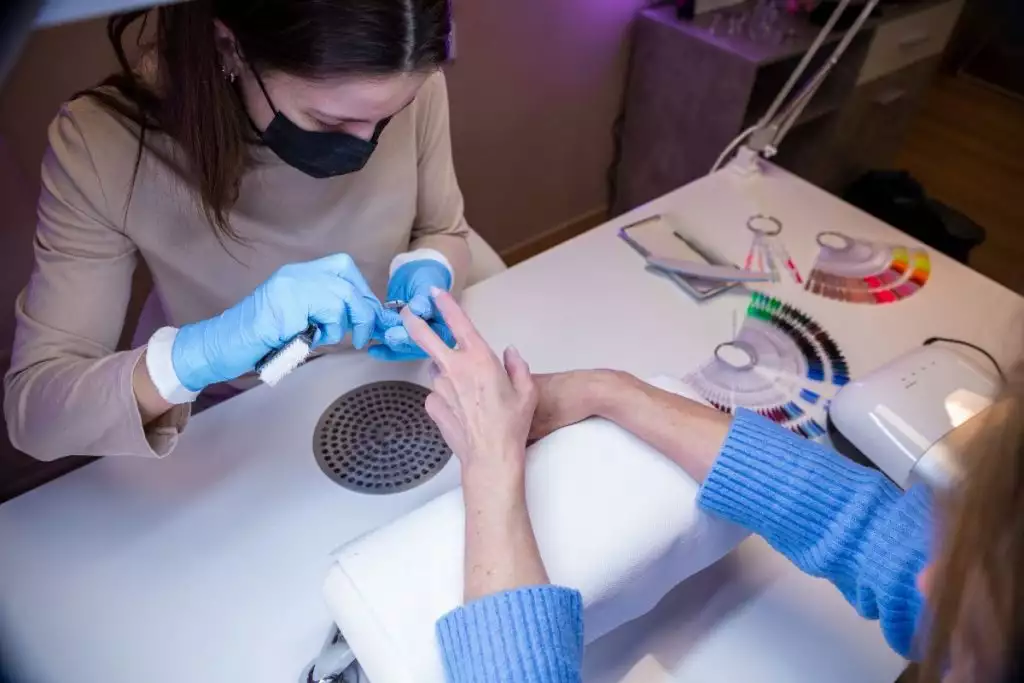
For example:
- 8-10 hours per week can bring in $800–$1,500 per month.
- If only working weekends, it can reach $2,000+ per month.
- Busy urban areas often pay more than rural areas.
Therefore, the income feels meaningful, not pocket change.
Salon Commission vs Self-Employed Income
Salon jobs are usually based on commission, such as 50/50 or 60/40. This creates less stress, but also lower take-home pay. On the other hand, self-employed nail techs tend to earn more because they set their own prices.
But working independently comes with its own costs. You have to pay for rent, tools, and marketing yourself. That’s why many nail techs start in a salon and then become independent as their clientele increases.
Licensing, Training, and Startup Costs Explained
Nail Technician Training and Certification
Every U.S state requires a license. You must attend and pass an approved training program. Programs typically take three to six months to complete, depending on your schedule.
It may seem like a hurdle at first, but licensing protects you, your work, and your clients. It also builds a lot of trust, which helps you charge fair prices later on.
You can check requirements through your state board or resources like the U.S. Bureau of Labor Statistics (https://www.bls.gov).
Nail Technician Side Hustle Startup Cost
The costs of starting a nail technician side hustle include school fees, exam fees, and basic tools. Most beginners spend a total of $3,000–$7,000.
That sounds high. However, many techs recover this cost within the first year. Planning your budget early prevents stress later.
Is Being a Nail Technician Profitable Long-Term?
How to Make Money as a Nail Technician
Profit comes to you when you have repeat clients, not one-offs. Rebookings, upsells, and quality of service are more important than speed alone.
For example, offering structured manicures or gel extensions doubles the price of a ticket in no time. Also, if your work is of a high standard and you like cleanliness, your clients will appreciate this.
Nail Technician Pricing Strategy Basics
A price too low will hurt you. If you price too high, your clients will be scared away and won’t come. Smart techs research local rates and adjust gradually.
A simple rule helps. Price for your skill level today, then raise rates as demand increases. This approach increases revenue without losing trust and your standards.
Who This Side Hustle Is Best (and Not Best) For
Nail Technician Side Hustle for Beginners
This works well if you enjoy detailed work, like working with people, and want extra income as a nail technician without a strict schedule. Beginners who are patient and persistent usually win.
However, you should enjoy and enjoy learning. Nails require practice, not shortcuts.
When This Second Job Is Not a Good Fit
If you want to make money without learning the job, it may not be possible. If you absolutely hate customer service or struggle with hygiene, you also struggle.
Also, the strain on your hands and back can feel real. If physical limitations bother you, consider another option.
Pros and Cons of a Nail Tech Side Business
Benefits of Nail Tech Side Income
This work offers flexibility, creativity, and repeat clients. Many techs enjoy building personal relationships while earning solid money.
Also, skills travel well. If you move cities, you don’t start from zero.
Risks and Downsides to Consider
Income fluctuates at first. Supplies cost money. Cancellations happen. Therefore, you need savings and clear policies.
Honesty matters here. This side hustle rewards consistency, not shortcuts.
Real-Life Part-Time Nail Technician Examples
Weekend Nail Tech with a Full-Time Job
Imagine working Saturdays only. You book six clients at $60 each. That’s $360 in one day. Over a month, that covers groceries or rent support.
However, energy matters. Scheduling breaks keeps this sustainable.
Parent or Student Side Hustle Scenario
Parents often prefer daytime clients while kids attend school. Students often work evenings. Both groups succeed when they pre-book clients.
Planning reduces stress and missed appointments.
How Long Does It Take to Build A Steady Income
First 3 to 6 Months Reality Check
The early months feel slow. You practice, build confidence, and learn client flow. Income grows unevenly.
However, each returning client speeds progress.
What Speeds Up Client Building
Social media helps, especially local Instagram pages. Referral discounts also work well.
In addition, simple online booking tools save time and reduce no-shows.
Nail Technician vs Other Beauty Side Hustles
Nail Technician vs Salon Employment
Salon jobs feel stable but have limited control. A nail technician’s second job offers more freedom but less certainty early on.
Some people combine both. That hybrid approach works well.
Mobile Nail Technician Business Model
The mobile nail technician side hustle income often runs higher per appointment. Clients pay for convenience.
However, travel time and setup matter. Pricing must reflect that effort.
Legal and Business Basics You Can’t Ignore
Nail Technician Legal Requirements
Rules vary by state. Some allow home-based work with permits. Others restrict it heavily.
Always check your state board before accepting clients. Ignoring rules risks fines or license loss.
Nail Technician Business Ideas That Work
Simple ideas work best. Loyalty cards, referral credits, and seasonal designs attract repeat visits.
Avoid overcomplicating things early.
Tools, Supplies, and Time Management Tips
Nail Technician Tools and Supplies Essentials
Simplify your life. You may need quality files, cleaning tools, lamps, and products you trust.
Buying cheap tools can lead to more expenses later.
Nail Technician Time Management for Side Work
Tackle similar tasks together. Prepare kits before clients arrive. Block booking times to avoid gaps.
This can help you earn more money without working longer hours.
What to Do Next If You’re Considering This
Nail Technician Startup Checklist
Before starting, do the following:
- Check state licensing rules
- Compare local nail schools
- Estimate total startup cost
- Decide salon vs independent
This clarity saves time and money.
Smart Decision Tips Before Enrolling
Talk to nail technicians in your area. Ask them honestly about their working hours and salaries.
Their real experience is always better than the online hype.
FAQ’s
Is a nail technician a good side hustle?
Yes, if you want to earn a good income by working and do not expect immediate results, and work patiently, then it can work very well and benefit you a lot in the future.
How much money can a nail technician make part-time?
Many people even earn $800–$2,000 per month, depending on hours, location, and prices.
Can you be a nail tech without a salon?
Yes, some states allow home-based or mobile services with proper permits.
How long does it take to become a nail technician?
Most programs take approximately three to six months, depending on state laws and class schedules.
Conclusion
Overall, if you want a good income, are willing to work hard and enjoy your job, and are willing to put in the effort, then a nail technician could be a great and rewarding career for you. It rewards patience, professionalism, and client care. If you are consistent and willing to learn, this path can further increase your income in the future without changing your primary job.