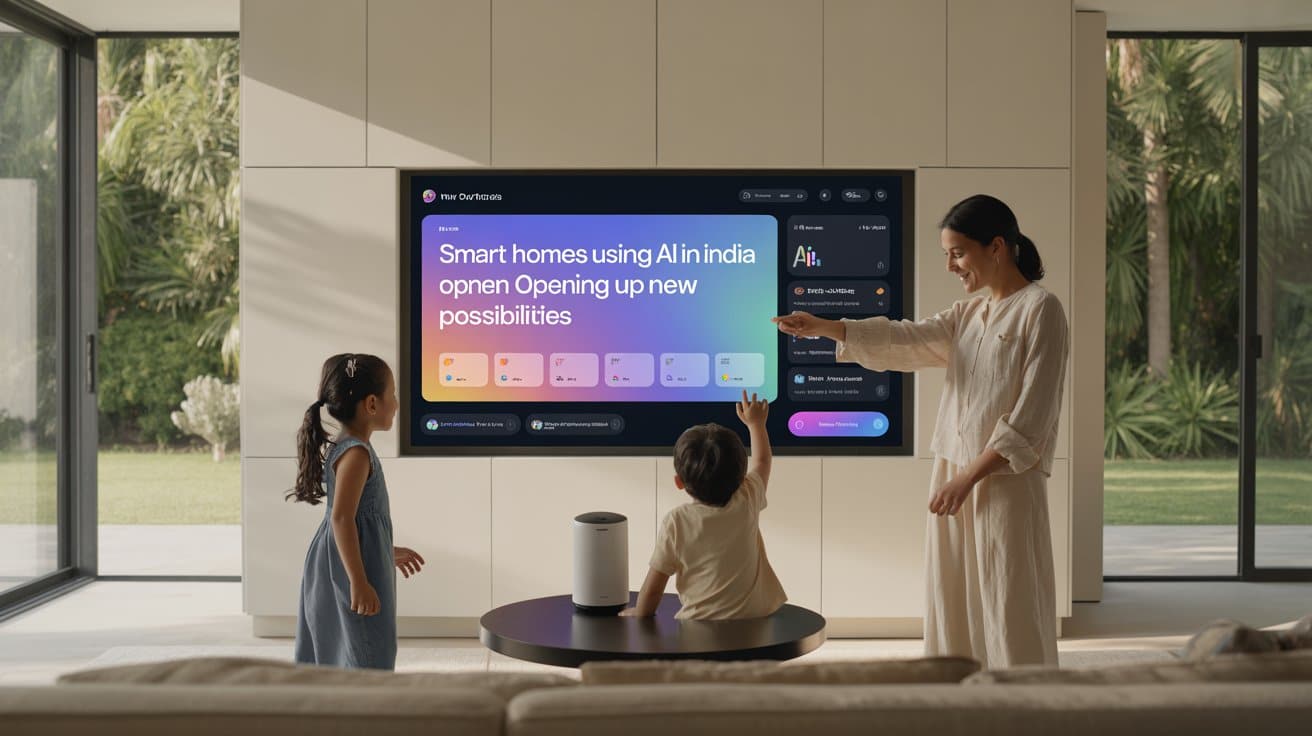
Smart homes using AI in India are opening up new possibilities for every family. Many people now want smart homes in India because life feels easier. Smart homes in India keep growing fast as more users try voice control and simple apps.
Smart homes using AI in India are opening up new possibilities for comfort and safety. A smart home in India can turn on lights, check security, and save energy with quick actions. These tools help busy homes run smoothly. Many families like how fast AI makes decisions.
Smart homes using AI in India are opening up new possibilities for modern living. You get connected devices that think ahead and support daily tasks. Smart homes in India use simple systems that learn your routine. A smart home in India also helps cut costs. Smart homes in India feel more useful when everything works with one tap.
What Are Smart Homes and How Does AI Fit In?

Smart homes in India use connected devices to manage daily tasks. These systems control lights, temperature, and security with simple commands. AI studies your routine, then adjusts your home automatically. You get a mother living because everything reacts in real time without extra effort.
Many families choose smart homes in India for comfort and safety. A smart home in India blends sensors, voice control, and automation to create a helpful digital environment. AI handles quick decisions that save energy and time. This blend makes home life easier while keeping everything simple for every user.
The Smart Home Market in India
The smart home market grows quickly as buyers explore new tools that make daily life easier in busy cities. Many people trust smart homes in India for comfort and safety. Families compare smart homes in India options that save energy. A smart home in India also supports simple automation each day.
More brands enter the market because demand rises across cities and towns with better connectivity and lower device prices. Customers choose systems that help manage lighting and security easily. AI improves routines inside smart homes in India while new services expand. Many households adopt solutions that reduce work and boost productivity.
- Growing Interest in Affordable Smart Devices
- Urban Buyers Driving Rapid Market Expansion
- AI Tools Improving Home Convenience
- Energy-Saving Features Attract New Users
- Indian Brands Strengthening Smart Home Choices
Core AI Technologies Driving Indian Smart Homes
Voice Assistants & Natural Language Processing
Voice assistants have become essential in smart homes in India for managing lights, security, and entertainment. They respond quickly to simple commands. Natural language processing allows these systems to understand speech accurately. This makes daily routines smoother and more efficient for families in modern homes.
With natural language processing, users can control devices easily. Smart homes in India benefit from hands-free operation and personalized responses. Families enjoy energy savings and better convenience. Voice assistants also help monitor safety, making homes smarter and more responsive to everyday needs.
Machine Learning for Energy Management
Machine learning helps smart homes in India save energy by analyzing usage patterns. Systems adjust lighting, heating, and cooling automatically. Predictive algorithms reduce electricity bills and optimize comfort. Families enjoy smarter energy control without extra effort in smart homes in India.
These tools monitor appliances and detect inefficiencies quickly. Machine learning predicts peak usage and shifts loads to off-peak times. Users get real-time alerts and personalized recommendations. This technology improves sustainability while keeping daily routines simple and efficient.
Computer Vision for Home Security
Computer vision enhances safety in a smart home in India by monitoring doors, windows, and entrances. Cameras detect unusual activity instantly. Alerts notify homeowners in real time. Families feel safer knowing their smart home in India watches over them continuously.
This technology recognizes faces and tracks movement efficiently. It can spot intruders or accidents quickly. Homeowners receive instant updates on their devices. Computer vision makes security systems smarter, reliable, and easier to manage every day.
Predictive Maintenance & IoT Analytics
Predictive maintenance uses sensors to track appliance health in real time. IoT analytics analyzes data from devices to predict faults before they happen. This reduces downtime and repair costs. Families enjoy smoother home operations as appliances run efficiently every day.
IoT analytics helps spot unusual patterns quickly. Predictive maintenance ensures heating, cooling, and security systems work reliably. Alerts notify homeowners about potential issues early. These tools make homes smarter, safer, and more energy-efficient without extra effort.
New Possibilities Unlocked by AI in Indian Homes

Personalized Living Spaces
Personalized living spaces use smart devices to adjust lighting, temperature, and music based on user preferences. AI learns routines and habits to make homes more comfortable. Families enjoy spaces that feel tailored to them. These systems improve convenience, efficiency, and overall satisfaction in daily life.
Smart homes use sensors and automation for customized experiences. Rooms can change settings automatically for work, relaxation, or sleep. Personalized living spaces save energy by optimizing usage. This technology creates a home environment that adapts naturally to each resident’s needs.
Energy Efficiency & Cost Savings
Energy efficiency helps homes use electricity wisely and reduce bills. Smart devices monitor usage and adjust lighting, heating, and cooling automatically. Families save money while staying comfortable. Efficient systems also lower carbon footprints, making homes greener and more sustainable for everyday living.
Smart homes use real-time data to optimize energy patterns. AI predicts peak usage and shifts loads to off-peak hours. Appliances run only when needed, cutting waste. These energy-saving measures provide both financial benefits and a more environmentally friendly home.
Health & Wellness Monitoring
Health and wellness monitoring helps families track sleep, activity, and indoor air quality. Smart sensors provide real-time alerts for fall detection or unusual health patterns. This ensures safety and timely intervention. Users can manage wellness easily without constant manual checks, improving daily comfort and peace of mind.
Wearable devices and smart home systems collect health data continuously. Alerts for medication reminders, pollution levels, or abnormal activity help prevent problems. AI analyzes trends to provide personalized recommendations. Health and wellness monitoring makes homes safer, more proactive, and supportive of overall well-being for every family member.
Enhanced Security & Safety
Enhanced security keeps homes safe with cameras, sensors, and automated locks. Smart alerts notify homeowners about intrusions or unusual activity immediately. Families feel protected around the clock. These systems make managing safety simple and reliable for every household.
AI and connected devices strengthen safety measures in homes. Motion detection, smoke sensors, and gas leak alerts provide early warnings. Homeowners can monitor remotely through apps on phones. Enhanced security and safety ensure peace of mind and quick responses to emergencies.
Real‑World Case Studies from India

Bengaluru Startup Spotlight
Bengaluru startups are leading smart home innovations in India. Many focus on AI-powered systems and connected devices for modern living. These companies create solutions for energy management, security, and personalized experiences. Startups help families adopt smart homes in India with practical, easy-to-use technology that fits daily routines.
Smart home startups in Bengaluru develop products for urban apartments and villas. They integrate IoT devices, voice assistants, and predictive automation to enhance convenience. Many trials show positive results for comfort and efficiency. Bengaluru startups play a key role in shaping the future of smart homes in India.
Mumbai Apartment Complex Trial
The Mumbai apartment complex trial tested AI-powered systems in daily living. Residents used smart lighting, thermostats, and security devices. The trial showed how technology improves comfort and efficiency. Families quickly adapted to smart home solutions in India, enjoying easier control and real-time alerts for safety and convenience.
The trial highlighted energy savings and personalized automation. Voice assistants and IoT devices made tasks hands-free. Residents appreciated predictive maintenance and smart monitoring. Results confirmed that a smart home in India can simplify routines while enhancing safety, comfort, and energy efficiency for urban households.
Challenges to Adoption in India
Infrastructure Gaps
Many regions in India face unreliable electricity and slow internet. This affects the performance of connected devices and automated systems. Homes cannot fully benefit from AI-enabled solutions. Poor infrastructure limits comfort, safety, and energy efficiency for families relying on technology.
Urban areas have better networks but still face occasional connectivity issues. Sensors, smart meters, and automated systems need stable power and broadband. Without improvements, many AI-powered systems cannot function properly. Addressing these gaps is essential for the wider adoption of intelligent living solutions across India.
Data Privacy & Security Concerns
Data privacy is a major worry for AI-enabled homes in India. Personal information from devices can be vulnerable to hackers. Families must ensure strong passwords and encrypted networks. Without proper safeguards, sensitive data could be exposed or misused.
Security concerns also include unauthorized access to cameras, sensors, and smart devices. Regular software updates and secure connections help reduce risks. Users should monitor device permissions and network activity. Protecting privacy and security is essential for safe and trustworthy AI-powered living spaces.
Upfront Costs vs. Long‑Term Benefits
Setting up AI-enabled homes requires an initial investment in devices and installation. Smart gadgets, sensors, and automation systems can be expensive at first. Families may hesitate due to high upfront costs.
However, long-term benefits often outweigh the initial spending. Energy savings, reduced utility bills, and maintenance alerts lower costs over time. Enhanced comfort, safety, and convenience make the investment worthwhile. Smart homes also increase property value and provide sustainable living advantages for the future.
Overcoming Barriers: Best Practices
Choose Interoperable Devices
Choosing interoperable devices is essential for smooth home automation. Devices that work together create a seamless experience. Families can control lighting, security, and appliances from one platform. Smart homes in India benefit most when gadgets communicate efficiently without technical conflicts.
Interoperable devices save time and reduce frustration. They allow easy updates and future expansions. Users can mix brands while maintaining full functionality. Selecting compatible products ensures that automation systems perform reliably and enhance everyday comfort and convenience in modern homes.
Ensure Local‑Language Support
Local-language support makes technology easier to use for everyone at home. Voice assistants, apps, and devices that understand regional languages improve accessibility. Families can control settings and receive alerts without confusion. A smart home in India becomes more user-friendly and inclusive when local-language options are available.
Devices with multilingual support enhance daily routines. Users can set reminders, manage energy, and monitor security effortlessly. Local-language commands reduce errors and improve efficiency. Ensuring this feature helps homes run smoothly and allows all family members to interact confidently with AI-enabled systems.
Leverage Finance Options
Finance options help make advanced home technology affordable. EMI schemes and flexible payment plans reduce upfront costs. Families can adopt smart devices without financial strain. Smart homes in India become accessible to more households through practical financing solutions.
Banks and brands offer loans or installment plans for AI-enabled systems. These options encourage wider adoption and let users enjoy energy savings, automation, and security benefits. Leveraging finance solutions makes upgrading homes easier, while ensuring families experience modern living without large immediate expenses.
The Road Ahead: Future Trends & Opportunities

5G + Edge AI
5G and edge AI transform home automation by enabling faster, real-time responses. Devices process data locally, reducing delays and improving efficiency. Families enjoy smoother control of lights, security, and appliances. AI-driven systems work seamlessly, creating a highly responsive and reliable environment for modern living.
Edge AI combined with 5G reduces dependence on cloud servers. Data is analyzed quickly on-site, improving privacy and decision-making. Users benefit from real-time alerts, predictive maintenance, and energy optimization. This technology makes homes smarter, safer, and more efficient, enhancing convenience and comfort for every household.
Integration with Smart Cities and Utilities
Integration with smart cities allows homes to connect with energy grids, water systems, and traffic networks. This improves efficiency and sustainability. Residents can monitor usage and optimize consumption. Smart homes in India gain from seamless coordination with city-wide AI systems.
Utilities integration helps manage electricity and water demand intelligently. Homes receive real-time updates and predictive alerts for energy use. Coordinated systems reduce waste and lower bills. This integration supports greener living and smarter urban management, making homes and cities more connected and responsive for everyday life.
Government Incentives
Government incentives encourage families to adopt AI-enabled homes and smart devices. Subsidies, tax benefits, and PLI schemes lower upfront costs. These programs make advanced home automation more affordable. Smart homes in India benefit from initiatives that support energy efficiency, safety, and modern living.
Incentives also promote sustainable practices like rooftop solar and smart grid integration. Homeowners gain access to funding for sensors, smart meters, and automation systems. Government support helps expand adoption across urban and suburban areas. These programs make it easier for families to enjoy intelligent living spaces without financial strain.
FAQ’s
What is the benefit of AI in modern homes?
AI improves comfort, security, and energy efficiency. Smart homes using AI in India are opening up new possibilities, making daily routines easier and more convenient.
How do automated systems help families?
They control lights, appliances, and security automatically. With smart homes using AI in India opening up new possibilities, homes respond intelligently to user needs.
Can energy bills be reduced with AI?
Yes, predictive energy scheduling optimizes usage. Smart homes using AI in India are opening up new possibilities, lower electricity bills, while saving resources.
Are these systems safe for children and the elderly
AI-driven monitoring provides fall detection and alerts. Smart homes using AI in India are opening up new possibilities, enhancing safety for all family members.
How easy is installation and setup?
Most devices support DIY installation with apps. Smart homes using AI in India are opening up new possibilities, allowing quick, hands-free setup.
Do these homes work offline or require internet?
Many functions need broadband, but some devices work offline. Smart homes using AI in India are opening up new possibilities that use both connectivity and local AI processing.
Can appliances predict maintenance needs?
Yes, predictive maintenance alerts users before issues occur. Smart homes using AI in India are opening up new possibilities, preventing breakdowns and saving repair costs.
Is voice control widely supported?
Voice assistants can manage lighting, security, and entertainment. Smart homes using AI in India are opening up new possibilities, including multilingual voice recognition for easier use.
Can homes learn user preferences?
AI systems track routines to personalize settings. Smart homes using AI in India are opening up new possibilities to adjust lighting, temperature, and devices automatically.
Are energy-saving features effective in hot climates
Yes, predictive automation and climate control optimize cooling. Smart homes using AI in India are opening up new possibilities to reduce electricity usage during peak heat.
How does AI improve security?
AI cameras and anomaly detection monitor threats in real time. Smart homes using AI in India are opening up new possibilities, alerting users instantly about suspicious activity.
Are these systems affordable for most families?
Initial costs can be high, but finance options help. Smart homes using AI in India are opening up new possibilities, providing long-term savings and convenience.
Conclusion
Smart homes using AI in India are opening up new possibilities are changing the way families live. They make daily routines easier and safer. A smart home in India can control lights, security, and appliances automatically. Many people now trust Smart Homes India for comfort and convenience.
Energy efficiency, predictive automation, and voice control are key features. Smart homes using AI in India are opening up new possibilities also help save money. Families enjoy real-time alerts and personalized living spaces. The technology adapts to your habits. Smart homes in India and smart homes in India are becoming popular across cities. Smart homes using AI in India, opening up new possibilities, are the future of modern living.