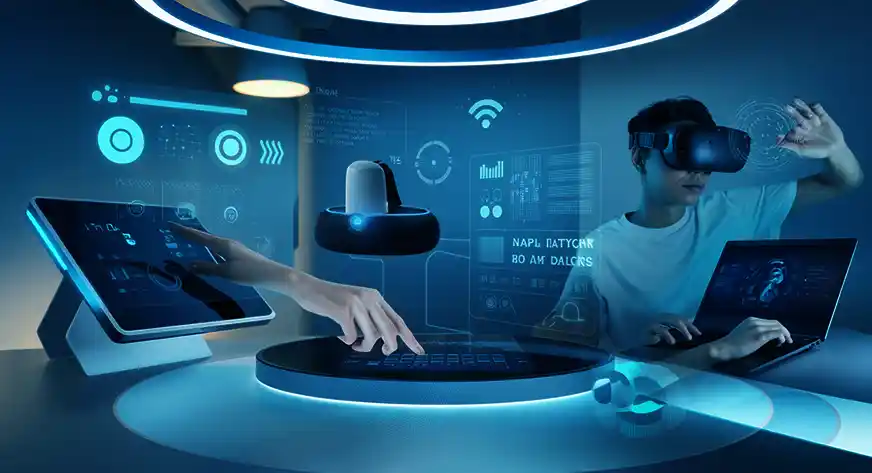
New tools shape the way you connect with digital systems. You see this change in every device you use. Designers create better interfaces to support smoother tasks. These upgrades help you work faster and think less about the system. That’s where how new technology impacts human-computer interaction becomes clear.
As new ideas grow, machines understand actions with more accuracy. You enjoy smarter displays and more intuitive responses. Systems read your intent with improved precision. This shift makes digital tasks feel natural instead of complex. Again, it shows how new technology impacts human-computer interaction in daily life.
Advanced features also offer safer and more personal experiences. You interact with devices through voice, touch, or gestures. These methods reduce effort and boost comfort. People adapt quickly when designs feel human. This is another example of how new technology impacts human-computer interaction today.
Definition and Scope
Human-computer interaction (HCI) studies how people interact with computers and digital systems. It focuses on improving usability, user experience, and interface design. HCI covers both software and hardware systems. It explores cognitive interaction, intuitive interfaces, and user performance. The field combines technology, design, and social sciences. It aims to create effective, user-centered systems for all environments.
- HCI examines how users interact with digital technology daily.
- Focuses on improving system usability and intuitive interfaces.
- Studies both hardware and software for a better user experience.
- Includes cognitive models to understand human decision-making processes.
- Explores human factors in computer-based system designs.
- Enhances interface effectiveness for productive digital interactions.
Historical Overview

Human-computer interaction has evolved over the decades. Early computing focused on timesharing systems and basic input-output devices. Graphical user interfaces transformed interaction in the 1980s. Advances in display technology and interface screens improved usability. The field now combines cognitive models, interaction design, and AI-driven systems. HCI continues to grow, shaping modern digital environments and user-centered computing.
- Early HCI relied on simple input-output computing systems.
- Timesharing systems enabled multiple users to access computers simultaneously.
- Graphical user interfaces enhanced visual interaction and usability.
- Display technology improvements allowed intuitive and engaging interfaces.
- Cognitive models guided the understanding of user behavior in computing.
- Modern HCI integrates AI and interactive computing systems.
Technological Advancements in HCI
Human-computer interaction has grown rapidly with new technology. Graphical user interfaces make computers easier to use. Touchscreens and voice commands improve user interaction. AI and machine learning help systems adapt to users. Virtual and augmented reality create immersive experiences.
Advances in display technology enhance visual clarity and responsiveness. Natural language processing allows computers to understand humans better. Cognitive automation supports complex decision-making in software systems. Mobile devices and wearables expand HCI beyond desktops. These innovations shape how people work, learn, and communicate daily.
User Interface Design
User interface design focuses on how people interact with computer systems. Clear screens, simple navigation, and intuitive layouts improve user experience. Input-output devices must be easy to use. Visual feedback, like alerts, helps prevent errors. Consistency across software and hardware enhances efficiency. Good design considers accessibility and cognitive load for all users.
- Intuitive interfaces make software simple and engaging for users.
- Consistent layouts improve user performance and satisfaction.
- Visual feedback helps prevent errors during interaction.
- Accessible design ensures everyone can use the system effectively.
- Simple navigation reduces cognitive load and learning time.
- Clear results display guide users to correct actions efficiently.
Artificial Intelligence and Machine Learning
Artificial intelligence and machine learning are transforming human-computer interaction. AI analyzes data and predicts user behavior. Machine learning improves system responses over time. Cognitive automation helps with complex tasks. Decision-making systems become faster and more accurate. AI enhances interface effectiveness and usability across devices.
AI-powered tools like pattern recognition and natural language processing simplify interactions. General-purpose AI supports memory retrieval systems and user performance. Optimization algorithms increase system efficiency. Intelligent systems adapt to user needs in real-time. AI and machine learning together create smarter, more intuitive computing environments.
Societal Implications of HCI

Human-computer interaction impacts modern society and information accessibility. Digital environments change how people work and communicate. Office automation and networked services improve efficiency. Knowledge systems and library information systems allow faster information flow. HCI transforms social activities and workplace structures significantly.
Technological society reshapes jobs and organizational roles. Digital communication systems influence social behavior. Ethical considerations arise with data privacy and user consent. Users must adapt to new interfaces and tools. HCI drives both convenience and responsibility in daily life.
Ethical Considerations
Ethical considerations in human-computer interaction guide responsible technology use. User privacy and data security are top priorities. Academic norms and freedom of speech must be respected. Designers follow evidence-based arguments and intellectual dialogue. Cross-disciplinary development helps ensure fairness. Ethical guidelines prevent misuse and protect societal values in digital environments.
- User privacy must be a top priority in all systems.
- Data security practices ensure safe interaction with technology.
- Ethical guidelines guide designers in creating responsible systems.
- Academic norms promote integrity in research and technology use.
- Freedom of speech should be maintained in digital platforms.
- Cross-disciplinary input improves fairness in technology development.
Privacy and Data Security
Privacy and data security are crucial in human-computer interaction. Users need protection for personal information and sensitive data. Encryption technology helps secure digital systems. Access control strategies limit unauthorized usage. User consent ensures ethical data handling. Human-centered security designs reduce perceived invasions and protect privacy effectively in all interactive computing systems.
- Encryption technology secures user data in all digital systems.
- Access control strategies prevent unauthorized access to information.
- User consent is essential for ethical data handling processes.
- Human-centered security improves trust in interactive computing systems.
- Privacy-sensitive solutions protect personal information effectively online.
- Security usability ensures users can safely interact with systems.
FAQ’s
How does innovation change user experiences?
New technology impacts human-computer interaction by making interfaces more intuitive. Users interact faster and enjoy smoother experiences across devices and digital environments.
Can AI improve system usability?
Artificial intelligence improves human-computer interaction by optimizing user performance. Machine learning helps create smarter interfaces and enhances cognitive interaction for better results.
What role does design play in interaction?
Interaction design benefits from new technology by enabling human-centered design. Usability and user experience improve, making digital systems easier and more effective to use.
How do interfaces adapt to new tools?
Modern technology impacts human-computer interaction through adaptive interfaces. Users enjoy personalized displays, better input-output devices, and responsive system feedback.
Does connectivity affect interaction quality?
High-speed networks enhance human-computer interaction by improving response times. Interactive computing systems become more efficient, supporting smoother communication and user satisfaction.
Conclusion
New technology has changed how humans interact with computers. It makes systems faster and more intuitive. Users can complete tasks with less effort and enjoy smoother experiences. Understanding how new technology impacts human-computer interaction helps designers improve usability and interface effectiveness. AI, machine learning, and smart devices all shape this interaction daily.
Knowing how new technology impacts human-computer interaction is key to future innovations. Designers can create intuitive interfaces that reduce errors and cognitive load. User performance improves while human-centered design guides system development. Accessibility, privacy, and usability all benefit. Studying how new technology impacts human-computer interaction ensures better user experiences and strengthens the relationship between humans and interactive computing systems.