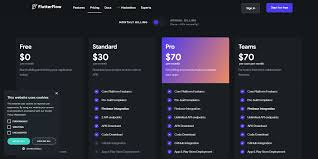
FlutterFlow attracts many new builders because it feels simple and fast. People often discuss FlutterFlow pricing, and for good reason. Many ask, Is FlutterFlow free? Others compare Flutterflow pricing, Flutter pricing, and FlutterFlow pricing to determine which one fits their budget.
The platform gives beginners and developers a clear path to build apps. Still, cost matters. Some users check the FlutterFlow cost before they start. Others ask about long-term plans or team needs. That is why FlutterFlow pricing shows up in almost every discussion.
You get a free option, but many want more power. So they explore upgrades and compare each level. The mix of features and price makes people return to the same question. Is FlutterFlow free enough for real work? That is why FlutterFlow pricing stays in the spotlight.
What is FlutterFlow?
FlutterFlow is a low-code app builder that helps people create mobile and web apps without heavy coding. It uses a clean drag-and-drop interface that feels fast and friendly. You can build cross-platform projects, test ideas, and ship updates quickly. Beginners enjoy the simple tools while developers like the option to add custom code when needed. The platform supports real-time teamwork, smooth integrations, and exportable source code for deeper control today.

Visual Building Basics: The platform lets you arrange screens, widgets, and layouts with simple actions. Its visual tools help you shape ideas fast while keeping them clean, organized, and easy to adjust during development.
Cross-Platform Output: It creates apps for iOS, Android, and the web from one project. This unified workflow cuts time, reduces mistakes, and helps teams work efficiently without juggling separate codebases too often.
Custom Code Options: You can extend visual features with custom code when you need deeper control. This blend of simple tools and flexible logic supports advanced ideas without forcing you to rebuild the project.
Team Collaboration : Teams can work together in real time, share feedback, and manage permissions easily. These tools help developers stay aligned, avoid conflicts, and move faster as features evolve across shared projects.
Platform Integrations: It connects smoothly with services like Firebase and Supabase. These integrations handle data, authentication, and storage, giving builders strong foundations without writing complex backend code or maintaining heavy server setups.
Testing and Debugging: You can preview screens, run flows, and test behavior instantly. This quick loop helps you catch issues early, refine logic, and deliver stable apps that feel reliable across devices today.
Deployment Options: The platform supports web builds, mobile outputs, and clean code exports. These choices let creators launch faster, manage updates easily, and adapt their apps for different audiences or evolving requirements.
Learning Resources: Tutorials, guides, and examples help newcomers understand workflows quickly. These resources shorten the learning curve, boost confidence, and give builders practical steps they can follow while creating real apps today.
FlutterFlow Pricing: How Much Does It Cost?
FlutterFlow’s Free Version
The free version gives beginners a friendly place to explore app building without pressure. It includes core tools, a clean drag-and-drop interface, and simple logic options. You can design screens, test flows, and understand how the platform works. This plan helps newcomers learn the basics before choosing advanced features or team-focused upgrades.
The free tier also supports small projects that need quick prototypes. You can preview builds, adjust layouts, and experiment with integrations at an easy pace. It works well for students, hobbyists, and early-stage creators. While limits exist, the free version still feels useful because it offers enough room to practice, learn, and build confidence as ideas grow.
FlutterFlow’s Standard Version: $30/Month (Billed Monthly)
The Standard plan offers stronger tools for creators who want more control and smoother workflows. It unlocks advanced features like better project management, cleaner exports, and deeper customization. This level suits builders who outgrow the free tier. It gives users enough power to design stronger app structures without overwhelming them. The plan fits solo developers who want steady progress.
The Standard version also supports more frequent testing and faster iteration. Users enjoy better performance, flexible options, and a more reliable building experience. It helps people refine layouts, manage data, and handle growing ideas with confidence. This plan provides a practical middle ground for creators who want serious tools without committing to larger, more expensive tiers.
FlutterFlow’s Pro Version: $70/Month (Billed Monthly)
The Pro plan gives builders stronger tools for serious app work. It adds advanced features that help users move faster and handle larger projects with more confidence. Developers get cleaner exports, richer integrations, and better control over complex logic. This tier suits people who want professional results without sacrificing speed or clarity during development.

The Pro version also supports frequent testing and smoother collaboration. It helps users refine workflows, manage data structures, and polish apps for real release. You gain more flexibility, stronger performance, and a toolkit built for demanding builds. This plan works well for creators who need power, precision, and reliable features to bring polished apps from early drafts to launch-ready form.
FlutterFlow’s Team Version: $70/Month Per User (Billed Monthly)
The Team plan is designed for groups that build apps together and need stronger control. It offers shared workspaces, smooth collaboration, and real-time updates that keep everyone aligned. Teams can manage roles, protect sensitive areas, and reduce conflicts. This plan supports growing projects that require structure, clarity, and consistent teamwork across multiple contributors.
The Team version also improves speed and coordination across developers. It helps groups test features, track progress, and organize complex tasks with less friction. Members can review changes, refine logic, and keep large builds moving forward. This tier suits studios, agencies, and organizations that need dependable tools to support fast-paced development and steady communication throughout each project.
FlutterFlow’s Enterprise Version: Contact FlutterFlow for Pricing
The Enterprise plan targets large organizations that need full-scale app solutions. It offers advanced security, unlimited project access, and custom workflows for big teams. Organizations can manage multiple projects, enforce strict permissions, and integrate complex systems. This tier is ideal for companies that want robust tools and professional support for enterprise-level app development.
The Enterprise version also provides dedicated support and scalable resources. Teams can handle heavy app traffic, maintain consistent performance, and implement advanced analytics. It allows businesses to streamline collaboration, automate processes, and meet strict compliance standards. This plan is perfect for enterprises that need high reliability, extensive control, and flexible solutions tailored to large-scale mobile and web app projects.
Build Enterprise Apps the No-Code Way
No-code tools let companies build complex apps without heavy coding. Teams can drag and drop elements, add logic, and connect databases quickly. This approach speeds up development and reduces errors. Businesses can launch apps faster while keeping control over features and design, even with limited coding experience.
No-code platforms also support collaboration across departments. Multiple team members can work on the same project in real time. Updates, testing, and deployment happen smoothly, saving time. Enterprises benefit from scalable solutions that grow with their needs while maintaining security, performance, and flexibility for internal apps, client projects, or customer-facing platforms.
Is FlutterFlow Worth It?
FlutterFlow is worth considering for beginners and experienced developers alike. It speeds up app development with a simple drag-and-drop interface. You can create cross-platform apps without writing long code. Its features, like real-time collaboration, custom code, and integrations, make building apps faster and more efficient.
The platform also offers flexibility for different project sizes. Small teams can prototype quickly, while larger teams manage complex projects. Exportable source code and deployment options give control over apps. For anyone wanting faster, manageable app development, FlutterFlow provides practical tools that save time and reduce frustration during the building process.
Adalo: The Best FlutterFlow Alternative
Adalo is a no-code app builder popular for quick mobile app creation. It uses a drag-and-drop interface, making design simple for beginners. You can connect databases, add logic, and preview apps instantly. Adalo supports cross-platform builds and allows creators to launch apps on iOS and Android with minimal technical hurdles.

It also provides templates and integrations to speed development. Teams can collaborate, test features, and deploy updates smoothly. Adalo works well for prototypes, small projects, and client apps. Its flexibility and ease of use make it a strong alternative for anyone looking to build apps without complex coding or a steep learning curve.
FAQ’s
What plans does FlutterFlow offer for app building?
FlutterFlow pricing includes Free, Standard, Pro, Team, and Enterprise plans, each with different features and limits to suit beginners, professionals, and large organizations.
Can beginners use FlutterFlow without cost?
Yes, FlutterFlow pricing allows a Free plan that lets beginners explore drag-and-drop building, basic integrations, and small projects without paying anything initially.
How much does it cost to upgrade?
Upgrading from Free to paid plans depends on FlutterFlow pricing, ranging from Standard at $30/month to Team and Pro options for advanced features.
Are there options for teams and enterprises?
FlutterFlow pricing includes Team and Enterprise plans, offering collaboration, project-level control, and scalability for large organizations or multiple developers.
Does the platform support advanced app features?
Paid tiers in FlutterFlow pricing unlock features like custom code, source code export, GitHub integration, and real-time collaboration for professional app development.
Is it worth investing in FlutterFlow for developers?
Many developers find FlutterFlow pricing reasonable because it saves time, supports cross-platform apps, and balances cost with powerful low-code and no-code tools.
Conclusion
FlutterFlow offers a range of plans that fit beginners and professionals. Many wonder, is FlutterFlow free? The Free plan lets users start building without paying. As projects grow, people check FlutterFlow pricing to see which plan fits best. Comparing FlutterFlow cost, Flutter pricing, and Flutter Flow pricing helps users make informed choices quickly.
Paid plans unlock advanced features for teams and enterprise users. Knowing FlutterFlow pricing helps decide whether to upgrade. The Standard, Pro, and Team options each balance cost with functionality. Users can manage budgets while accessing features they need. Whether small projects or large apps, understanding FlutterFlow pricing and FlutterFlow cost ensures smarter decisions. Beginners and developers alike benefit from knowing all the details about FlutterFlow pricing.